Free Fire Beginner Guide: Win Better Fights with Cover, Timing and Teamwork
4 min read
Part of the beginner collection — explore all 10 guides ↗
MAKE IT YOUR READSaved
Learn Battle Royale fundamentals, practise useful Gloo Wall decisions and follow a seven-day improvement plan without chasing a temporary meta.
Free Fire can make a match feel urgent from the moment you land. The useful response is not to do everything faster. It is to reduce the number of decisions you must make under pressure: know your controls, recognise a safe position and decide what you want from a fight before entering it.
This guide concentrates on Battle Royale. Garena also offers Clash Squad, but its round-based rhythm should not be confused with learning a full battle royale rotation. Read the mode description in your client before queuing. The drills below are Mghamer's suggested learning routine, not a promise that one character or sensitivity setting will carry you.
Build a simple setup and repeat it
Choose a control layout that lets you aim, move and select defensive equipment without searching the screen. Begin with comfortable settings and keep them stable for several sessions. A copied professional layout is only a starting example; the shape of your phone and your hand placement are your own.
Test your connection at the time you normally play. MENA spans very different routes and providers, so do not assume the region name alone guarantees a low-latency match. Note whether the problem looks like delayed actions or a phone struggling to keep the scene smooth. Avoid changing every graphics and connection setting after one frustrating duel.
Read the descriptions of the abilities you equip. Pick a small set you understand and practise recognising when they are useful. Do not build your first week around buying an item or copying a supposedly unbeatable combination. A clear decision you can repeat is a better learning tool than a complicated setup you forget during a fight.
Land with a route out
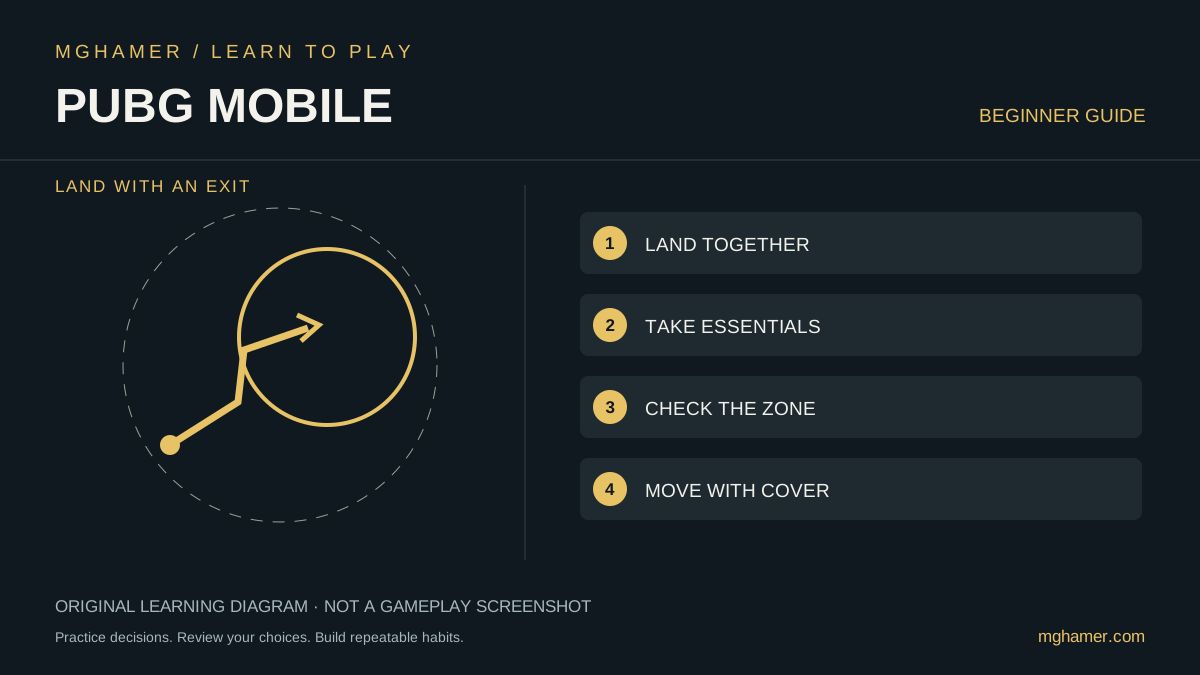
Before landing, identify two nearby buildings and the cover between them. If opponents arrive first, use your alternative instead of insisting on the original doorway. Your first objective is to become ready to move: a usable weapon, appropriate ammunition and enough basic supplies to avoid immediately returning for loot.
Check the safe area after the initial search. Choose a destination with a way out, not merely the nearest building inside the boundary. A house can protect you from one direction while trapping you against a closing zone. When playing with friends, agree on the next destination before one teammate starts running alone.
Use a simple fight question: “What improves if we win this?” Holding a useful route or protecting a teammate can justify a fight. Chasing someone away from your path while your squad becomes separated often does not. Beginners benefit from learning to finish a decision together, even when it is an imperfect decision.
Make Gloo Walls buy you a decision
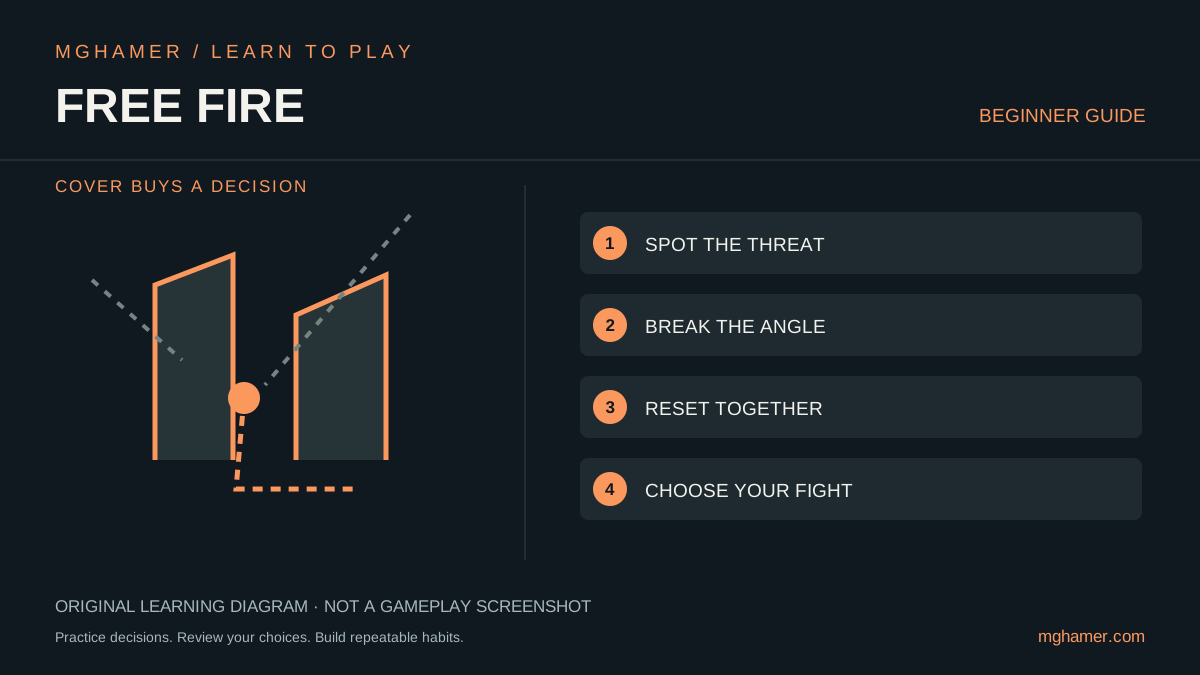
Garena describes Gloo Walls as cover for combat and exposed terrain. Think of that cover as time to make your next choice, not permission to stop thinking. Its placement should solve a specific problem: blocking the enemy angle that prevents you from moving, recovering or helping a teammate.
Practise selecting and placing a wall before you urgently need it. Then add a second action: move to another position, recover safely or reconnect with your squad. The drill is not complete when the wall appears. Ask where you will be a moment later and whether another opponent can see you from the side.
For example, you are caught between a building and a teammate behind a rock. Identify the dangerous direction, create protection where available and move with a purpose. Repeatedly placing cover without changing a losing position can consume resources without improving your situation. Exact wall interactions and abilities can change; read the current item description.
Three mistakes that make learning harder
First: copying a sensitivity number and expecting automatic headshots. Use one controlled aiming drill to judge whether you can stop your aim reliably. Second: collecting equipment while your teammate fights nearby. Decide whether to help, retreat or communicate; silence leaves both players guessing. Third: treating every loss as a reason to rush harder next match. Identify whether the real failure was timing, cover or separation.
Your first seven days
Day one: find comfortable controls and practise reaching defensive equipment. Day two: learn a small landing area's exits. Day three: complete five deliberate cover-to-cover moves. Day four: practise a Gloo Wall followed by a useful second action. Day five: play with a partner and announce every intended rotation. Day six: review three losses and classify their main cause. Day seven: repeat a normal session while correcting the most frequent mistake.
Keep your review short enough that you will actually do it. One line per match is sufficient. Progress looks like fewer panicked button presses and more fights entered with a clear purpose. That foundation remains useful when seasonal items and favourite character combinations change.
Sources & further reading
- Garena — Free Fire official game and modesff.garena.com
- Garena — Gloo Makers developer blogff.garena.com
What did you take away?
Real reactions. Thoughtful discussion. Every comment is reviewed before it appears.
Loading reader contributions…
Sign in to join the discussion